
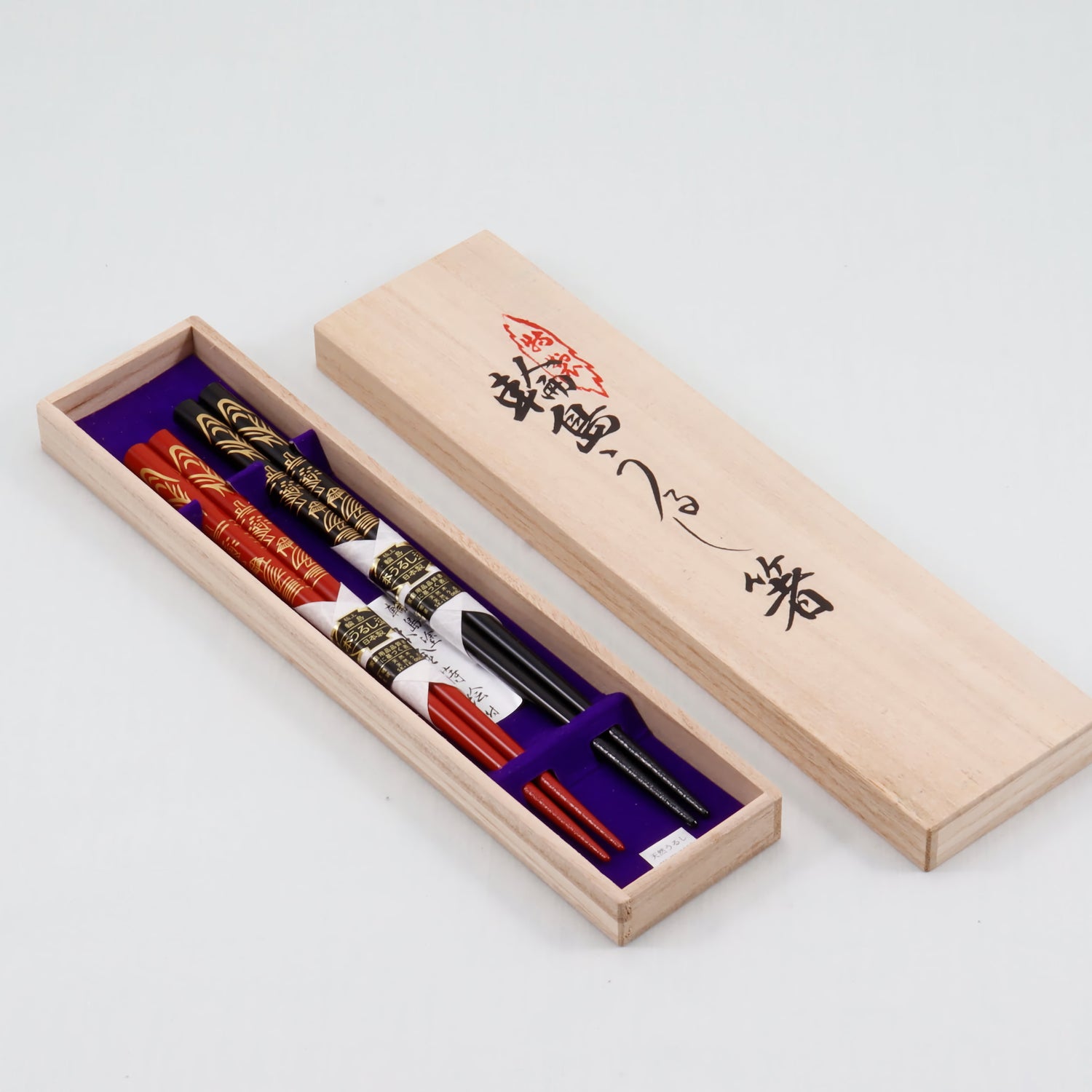
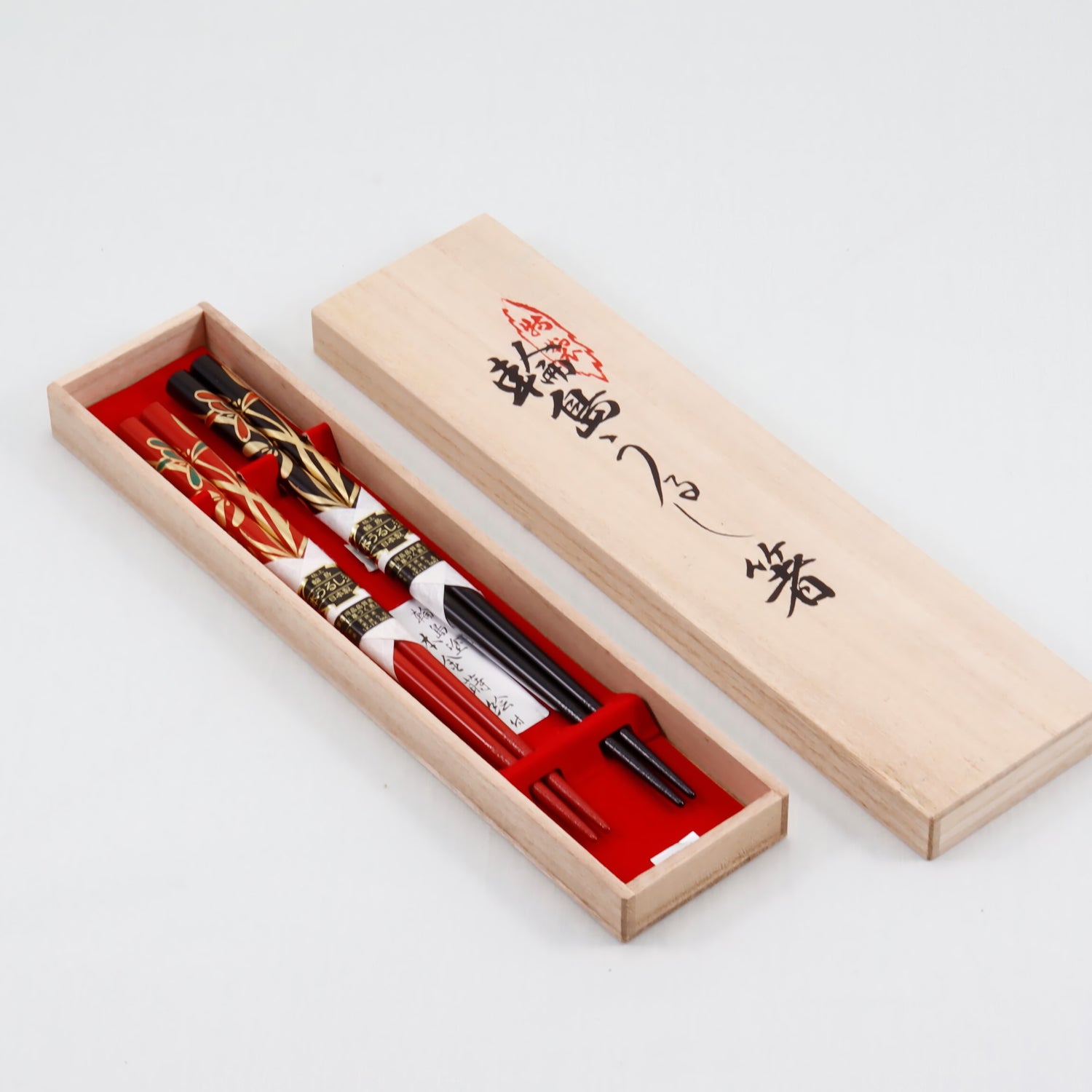
Collection: Wajima lacquerware Chopsticks
Chopsticks are traditional eating utensils commonly used in many Asian countries, including Japan, China, Korea, and Vietnam. They consist of a pair of slender sticks held in one hand to pick up food.Key Features of Chopsticks:
Material: Typically made from wood, bamboo, metal, plastic, or lacquered materials. In luxury versions, materials like ivory, jade, or precious metals may be used.
Shape: Varies by culture. Japanese chopsticks are usually shorter with pointed tips, Chinese chopsticks are longer with blunt ends, and Korean chopsticks are flat and made of metal.
Length: Ranges from 20–25 cm (8–10 inches) for adults; children's versions are shorter.
Design: Can be simple or decorated with intricate patterns, lacquer work, or inlays.
Cultural Significance and Use:
In Japan, chopsticks are called hashi (箸) and are an important part of dining etiquette.
Different occasions may call for specific types of chopsticks, such as 祝い箸 (iwaibashi) for celebrations.
Proper chopstick etiquette is important, such as not sticking them upright in rice, as this resembles a funeral ritual.


Tamekichi Mitsui
The art of Mitsui Tamekichi captures the depth and sensibilities of discipline and aesthetic refinement. His use of vibrant Kutani gosai "five colors" and elegant, dignified expressions bring to life the sophisticated artistry of natural motifs. By embracing ko-Kutani or old Kutani styles and perfecting techniques passed down through the centuries, his creations garner admiration for the enduring classical beauty of Kutani ware's polychrome artistry.





Recently viewed
Let customers speak for us
A gift for my wife’s birthday.
She loves it,

I couldn't be happier with this Kutani ware incense burner. The decoration is just beautiful. The store were very quick to process and ship my order - I'd happily buy from them again.

Long lead item but was perfect when received.

Super fast international shipping, extremely well packed and beautiful presentation. COMPLETELY WOWED!

Packaging was perfect and arrive safely. Amazing packaging and execution

it arrived elegantly wrapped and safely packed, the item itself is fabulous.

I was so pleased with the beautiful craftsmanship of this delicate bowl, and the way it came wrapped in a wooden box tied up in cloth. Exceptional experience.

As beautiful as it is on the photo! It feels one of a kind.

Very pleased with both the item and customer service experience. Beautifully packaged, fast delivery, great communication from seller.

The website, product, process and service have all been first-class.

Nice flower vase. Good product!

This is adorable! I need all the colors!

Once again, I just put them all around my home and enjoy them!

